
Why an Elderly Companion Care Professional Can Transform a Loved One’s Life
Around 940,000 people aged 65 and over in the UK are often lonely (Age UK, 2024).
In England, an estimated 270,000 older people go a whole week without speaking to a friend or family member (Age UK, 2024). Numbers like this are simply heartbreaking to read about.
For families with an aging parent living alone, the worry is rarely only about physical safety; it’s also about what that silence is doing to someone they love, day after day.
A dedicated, elderly companion care professional closes that gap, and at Noble Live-In Care, that means more than company. Our care professionals provide personal care and practical daily help alongside genuine companionship, all from a consistent team matched to your loved one.
This article explains what the role involves, how companionship-only services differ from live-in care that includes personal care, what care costs in the UK and how to choose someone you can trust for your loved one.
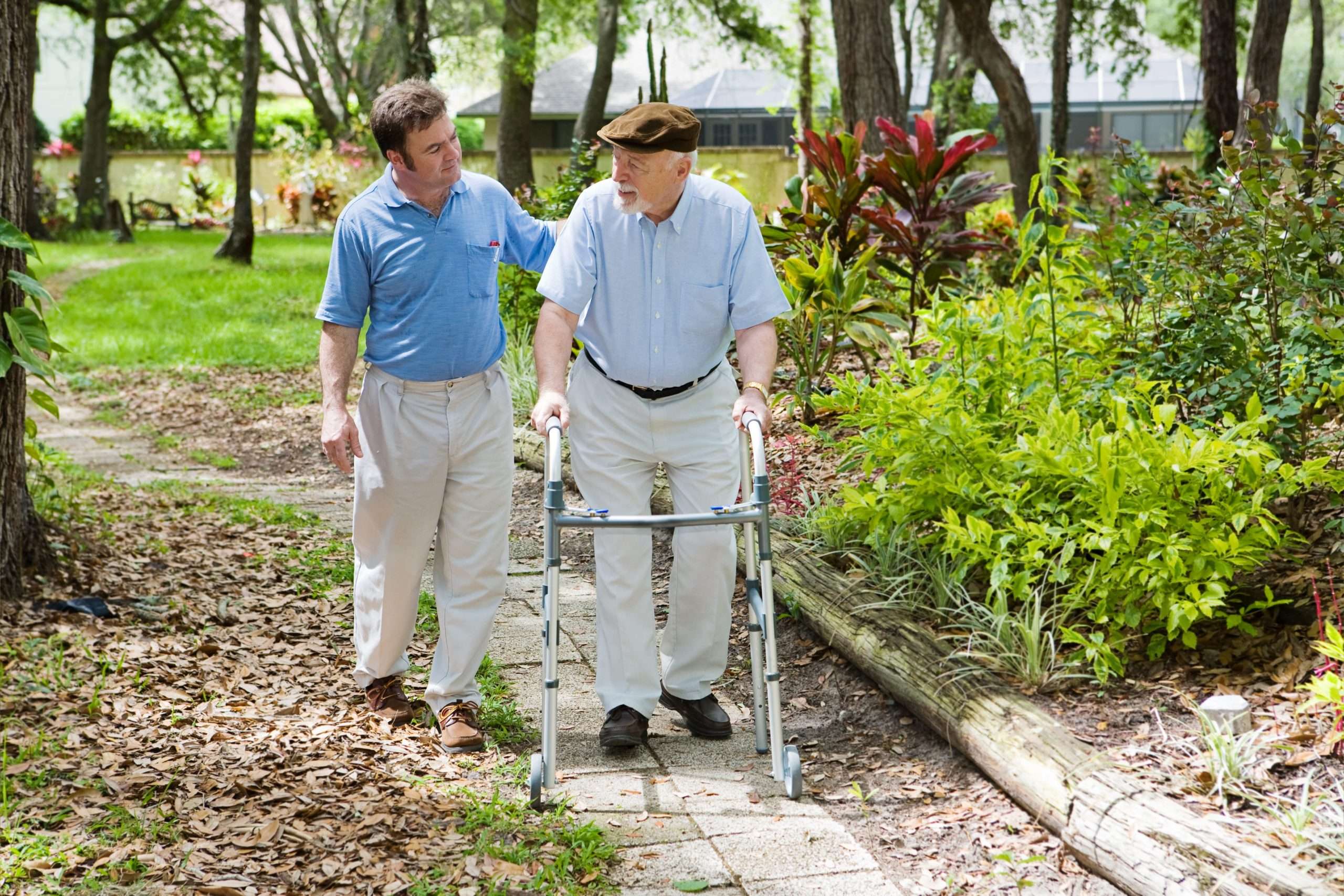
The hidden health toll of loneliness on older people
The scale of loneliness in later life
Age UK estimates that 7% of people aged 65 and over in the UK are often lonely: around 1 in 14 people (Age UK, 2024). Wider survey data shows that 15% of adults aged 65 to 74, and 18% of those aged 75 and over, feel lonely at least some of the time (NHS England, 2026).
This is not a widely known problem. It’s a quiet one, yet it’s running through a large part of the older population.
What isolation does to mental and physical health
9 in 10 older people who are often lonely are also unhappy or depressed, compared with 4 in 10 of those who are hardly ever lonely (Age UK, 2024).
The physical risks are just as real. A systematic review found that loneliness and social isolation were linked to a 29% higher risk of coronary heart disease and a 32% higher risk of stroke (Valtorta et al., 2016). A major meta-analysis found that loneliness, social isolation and living alone raised the likelihood of early death by 26%, 29% and 32% respectively (Holt-Lunstad et al., 2015).
Social isolation is also one of 14 risk factors for dementia identified by the Lancet Commission (Livingston et al., 2024).
Consistent human connection is not a luxury in later life.
It is part of staying physically and mentally well, as shown by the s
What an elderly companion care professional does
Companionship: the heart of the role
Companionship means real conversation, company at appointments and on daily outings, help with meals, support with hobbies, running errands and staying socially engaged throughout the day.
The value is not the task list. Rather, it is the consistency and quality of that presence. A good care professional becomes a familiar, trusted face rather than a stranger with a checklist.
Personal care: support delivered with dignity
Many companionship-only services stop short of personal care. They will not help with washing, bathing, dressing or using the toilet, so families often have to arrange a second service when needs change.
At Noble Live-in Care, our care professionals provide both.
Alongside companionship, our care professionals offer support with:
- washing, bathing and showering
- dressing and personal grooming
- continence care and using the toilet
- moving safely around the home
- medication, in line with their agreed care plan
- preparing meals and help with eating and drinking
When it comes from someone your loved one already knows and trusts, it feels less like a procedure and more like help from a familiar person, which helps protect dignity, comfort and confidence.
It’s worth noting that personal care is a regulated activity. In England, any organisation providing it must be registered with the Care Quality Commission (Health and Social Care Act 2008 (Regulated Activities) Regulations 2014) You can view our CQC report here
Where the role ends
Care professionals are not nurses. Clinical care, such as wound dressings or injections, stays with the NHS team, including the GP and district nurses.
A live-in care professional works alongside them, noticing changes early, raising concerns and making sure appointments are kept.
Find out more about Care Services at Noble Live-In Care
When hourly visits aren’t enough: the case for live-in care
Why consistency is the heart of good care
Short, infrequent visits can ease isolation to a degree, yet they rarely build the kind of relationship that changes someone’s daily life.
A care professional who knows your loved one’s routines, preferences, sense of humour and personal history offers something rotating staff and brief drop-ins simply cannot. That depth of connection takes time, and it only forms when the same person shows up, day after day.
It matters even more when personal care is involved. Being helped to wash or dress by a different face each visit is a very different experience from being supported by someone you know well.
Noble Live-in Care: matched for personality, not just practicality
Noble Live-in Care takes a relationship-first approach. We match each client with a dedicated team of care professionals who live alongside them, providing personal care, practical help and everyday human warmth.
Your loved one has someone to help them start the day comfortably, share a morning cup of tea with, talk through their day and genuinely look forward to seeing.
It is the difference between a life that feels managed and one that feels lived.
Get in touch with our team to find out how our matching process works and what it looks like in practice
Signs your loved one may need more support
Changes in social behaviour and daily habits
If an older person has stopped calling friends, withdrawn from activities they used to enjoy or become reluctant to leave the house, take it seriously. A once-sociable parent who now spends most days in silence is telling you something about their quality of life, not just their age.
Withdrawal often happens gradually, and that is exactly why it’s easy to dismiss as “just getting older.”
Shifts in mood, motivation and self-care
Watch for low mood, a barely touched fridge or a home that once ran like clockwork now slipping. Look too for signs that personal care has become harder: wearing the same clothes for days, skipped baths or showers, missed medication or near-misses on the stairs.
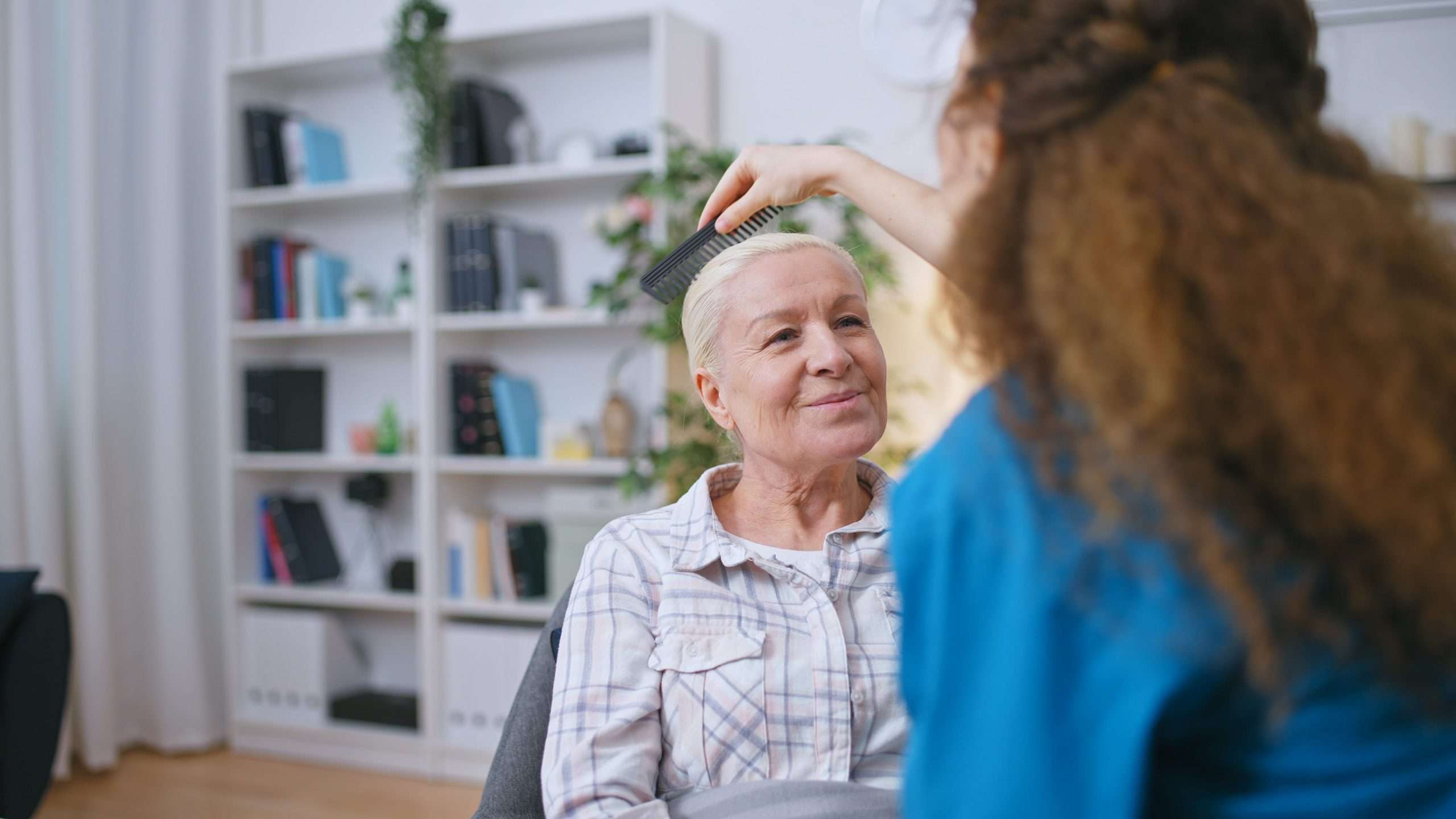
Typical UK costs and your options
What paid care costs
Hourly home care in the UK typically costs between £26 and £38 per hour (homecare.co.uk, n.d.). The Homecare Association puts the minimum sustainable rate for 2026/27 at £34.42 per hour, and self-funders using an agency should expect to pay at least around this figure (Which?, 2026).
Live-in care is priced weekly. Fees generally range from around £900 to £1,400 per week and can reach £2,000 or more, depending on needs and provider (homecare.co.uk, n.d.).
For someone who needs help several times a day, including personal care, live-in care means consistent, familiar care professionals rather than a series of short visits from different carers.
You may also be entitled to council support. In England, anyone with savings and assets above £23,250 usually pays for their own care, following a needs assessment and a financial assessment by the local authority (Which?, 2026).
To read more about live-in care costs, here is our guide.
Free and charity-based befriending services
Several national organisations offer free companionship. The Silver Line Helpline, run by Age UK, offers free friendship calls to people aged 55 and over, 24 hours a day, on 0800 470 80 90 (Age UK, n.d.).
Age UK local branches, Re-engage and the Royal Voluntary Service also match volunteers with isolated older people.
These services are valuable for mild loneliness, but they cannot provide personal care, and they are not designed to offer a consistent, daily presence. For many families, they are a useful first step rather than a long-term solution.
Vetting a care professional: what to check
Choose a registered provider
If your loved one needs personal care, check that the provider is registered with the Care Quality Commission (Health and Social Care Act 2008 (Regulated Activities) Regulations 2014). Read its latest inspection report on the CQC website before you commit.
DBS checks and what level to ask for
Providing personal care to an adult is a regulated activity (Safeguarding Vulnerable Groups Act 2006, as amended by the Protection of Freedoms Act 2012). The appropriate check for this work is an Enhanced DBS check with a check of the adults’ barred list.
If you use an agency, ask how it carries out these checks. If you hire a self-employed carer directly, note that since 21 January 2026 self-employed workers and personal employees can apply for Enhanced checks themselves through a registered DBS umbrella body (Disclosure and Barring Service, 2026). Families cannot apply on their behalf.
The key rule: always ask to see the certificate in the carer’s own name, and confirm it matches the duties they will actually carry out.
Never accept a verbal assurance in its place.
Training and the questions that matter
Look for training in moving and handling, safeguarding, condition awareness, medication and first aid. For care workers in England, completion of the Care Certificate is a good sign of core training (Skills for Care, n.d.).
The questions worth asking directly are:
- Have you supported someone with similar needs or a similar condition?
- How do you protect someone’s privacy and dignity during personal care?
- How would you approach a day when the person you support doesn’t feel like company?
- What would you do if you were worried about their health or safety?
The answers reveal far more than a CV. A candidate who responds thoughtfully and specifically is worth meeting in person.

The right support can change daily life
Loneliness in later life is not something to accept.
Loneliness is a health risk, and so is struggling alone with washing, dressing and daily routines. A care professional who is well matched, properly checked and genuinely present can change the whole tone of an older person’s day.
Whether your family starts with a befriending service, hourly visits or full live-in care, the most important step is to act rather than wait.
Noble Live-in Care works with families across England to find care professionals who offer personal care, practical help and real human connection.
Contact our team to find out how a personally matched care professional could make a difference for your family.
References
- Age UK (2024) Age UK’s new report shows ‘you are not alone in feeling lonely’. Available at: https://www.ageuk.org.uk/latest-press/articles/age-uks-new-report-shows-you-are-not-alone-in-feeling-lonely/ (Accessed: 29 September 2026).
- Age UK (n.d.) The Silver Line Helpline. Available at: https://www.ageuk.org.uk/services/the-silver-line-helpline/ (Accessed: 29 September 2026).
- Disclosure and Barring Service (2026) Self-employed workers and personal employees can now apply for Enhanced DBS checks. Available at: https://www.gov.uk/government/news/self-employed-workers-and-personal-employees-can-now-apply-for-enhanced-dbs-checks (Accessed: 29 September 2026).
- Health and Social Care Act 2008 (Regulated Activities) Regulations 2014, SI 2014/2936. Available at: https://www.legislation.gov.uk/uksi/2014/2936/contents (Accessed: 29 September 2026).
- Holt-Lunstad, J., Smith, T.B., Baker, M., Harris, T. and Stephenson, D. (2015) ‘Loneliness and social isolation as risk factors for mortality: a meta-analytic review’, Perspectives on Psychological Science, 10(2), pp. 227–237.
- Homecare.co.uk (n.d.) How to pay for care and support at home. Available at: https://www.homecare.co.uk/fees/feesadvice.cfm (Accessed: 29 September 2026).
- Livingston, G. et al. (2024) ‘Dementia prevention, intervention, and care: 2024 report of the Lancet standing Commission’, The Lancet, 404(10452), pp. 572–628.
- NHS England (2026) Health Survey for England 2024: loneliness and wellbeing. Available at: https://digital.nhs.uk/data-and-information/publications/statistical/health-survey-for-england/2024/loneliness-and-wellbeing (Accessed: 29 September 2026).
- Protection of Freedoms Act 2012, c. 9. Available at: https://www.legislation.gov.uk/ukpga/2012/9/contents (Accessed: 29 September 2026).
- Safeguarding Vulnerable Groups Act 2006, c. 47. Available at: https://www.legislation.gov.uk/ukpga/2006/47/contents (Accessed: 29 September 2026).
- Skills for Care (n.d.) The Care Certificate. Available at: https://www.skillsforcare.org.uk (Accessed: 29 September 2026).
- Valtorta, N.K., Kanaan, M., Gilbody, S., Ronzi, S. and Hanratty, B. (2016) ‘Loneliness and social isolation as risk factors for coronary heart disease and stroke: systematic review and meta-analysis of longitudinal observational studies’, Heart, 102(13), pp. 1009–1016.
- Which? (2026) Paying for care at home. Available at: https://www.which.co.uk/later-life-care/financing-care/home-care-finance (Accessed: 29 September 2026).