
As care needs increase later in life, many couples are faced with difficult decisions about how and where support should be provided. Too often, this leads to one partner moving into residential care while the other remains at home, not because they want to live apart, but because they feel they have no alternative.
Where we live, and who we live with, matters deeply. It affects emotional well-being, daily routine, and quality of life. Increasingly, research also shows it is closely linked to life expectancy. For couples who have spent years or decades together, remaining at home with the right support can be one of the most important factors in continuing to live well, and for longer, side by side.
Find out more about our care options.

What Life Expectancy Research Tells Us
Research from the Office for National Statistics examining life expectancy in care homes in England and Wales shows a significant difference between people living in residential care and those living elsewhere. On average, older people living in care homes have a much shorter remaining life expectancy than people of the same age who are not in care homes.
For example, earlier ONS analysis found that people aged 65–69 living in care homes had an average remaining life expectancy of several years, compared with around two decades for people of the same age living outside care homes. While this difference reflects the fact that people entering care homes often have more complex health needs, it also highlights how living arrangements and care models intersect with long-term outcomes.
For couples, this data raises an important question: if care can be safely provided at home, does remaining together in familiar surroundings support better quality of life and potentially longer shared time?
When Care Needs Separate Couples
Many married or long-term partners do not live together, often because one person has moved into residential care. This separation is rarely a choice made lightly. It can happen suddenly following illness, hospital discharge, or increasing frailty, leaving couples with little time to explore alternatives.
Living apart after a lifetime together can be emotionally distressing. Daily connection is reduced to visits, routines are broken, and shared independence is lost. Over time, this separation can contribute to loneliness, anxiety, and a loss of purpose for both partners, factors known to affect health and wellbeing in later life.

Live-In Care as an Alternative to Separation
Live-in care offers a different path. Instead of one partner moving away to receive care, professional support moves into the home. This allows couples to remain together while ensuring that care needs are met safely and consistently.
With live-in care, support is tailored around the couple’s life rather than requiring them to adapt to an institution. Care may include help with personal care, mobility, medication, meals, household tasks, and daily routines — all while preserving the shared home environment.
For many couples, this continuity helps maintain emotional stability, reduces stress, and supports a sense of normal life, even as health needs change.
Why Staying at Home Can Support Longer, Better Living
Remaining at home with the right support can offer several advantages that matter over the long term:
Familiar surroundings
Living in a familiar environment can reduce confusion, anxiety, and distress, particularly for people with cognitive impairment or complex health conditions. Comfort and predictability play an important role in emotional and physical wellbeing.
Shared emotional support
Partners who remain together continue to provide reassurance, companionship, and emotional grounding for one another. This everyday connection can support mental health and resilience as needs increase.
Reduced strain on the well partner
Live-in care helps ensure that one partner does not become exhausted or overwhelmed by caring responsibilities. By sharing the load, couples are better able to maintain their relationship rather than shifting entirely into a carer-and-patient dynamic.
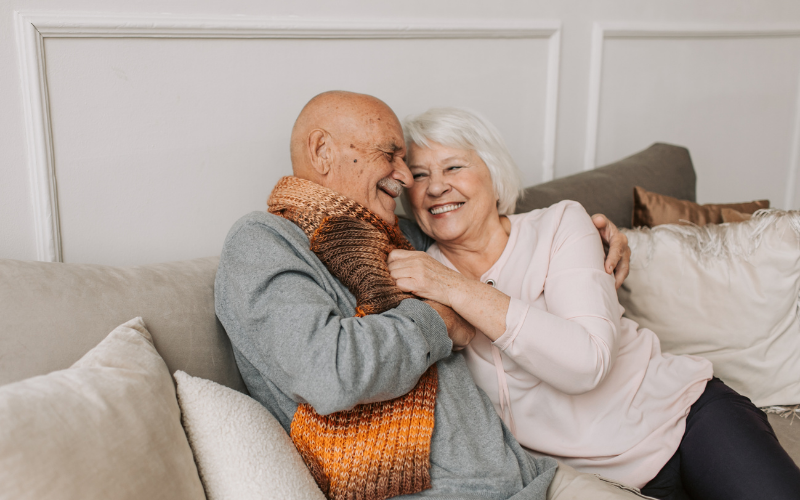
The Carer’s Perspective: Enabling Life, Not Taking It Over
From a carer’s point of view, live-in care is about supporting the whole household, not just completing tasks. Carers frequently describe their role as enabling couples to continue their life together, rather than replacing family relationships.
This means:
- Supporting personal care and mobility so couples can spend time together without worry
- Managing practical tasks so shared moments are not overshadowed by exhaustion
- Respecting routines, privacy, and long-established ways of living
- Creating a calm, safe environment that allows both partners to relax
Carers often see firsthand how staying together at home supports emotional well-being and how that well-being feeds into better day-to-day health.
More Than Longevity: Preserving the Life You’ve Built
Life expectancy statistics tell part of the story, but they do not capture what matters most to many couples: shared time, dignity, and continuity. Live-in care supports not only physical needs, but the life two people have built together — their home, their routines, their shared memories.
By remaining together, couples can continue to:
- Wake up and go to bed under the same roof
- Share meals, conversations, and quiet moments
- Maintain a sense of partnership and independence
- Face health changes together rather than apart
A Thoughtful Approach to Care Decisions
Choosing care is never just a practical decision, it is an emotional one. For couples, it is also a decision about togetherness. When care can be provided safely at home, live-in care offers a way to protect connection, reduce unnecessary separation, and support a life lived side by side for as long as possible.